Study Abroad Experience in Toledo, Spain
Spring 2026
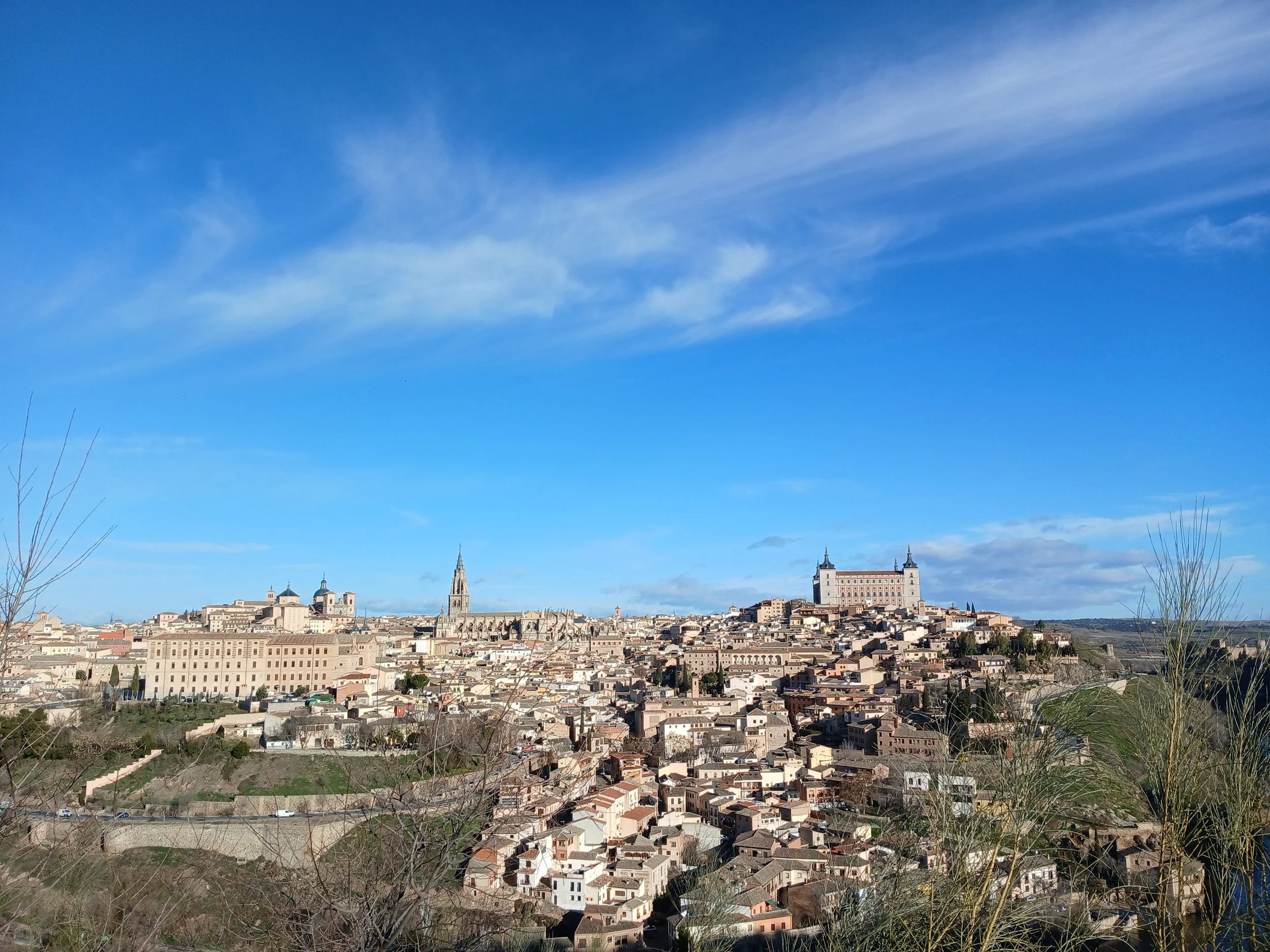
Throughout my entire career at Clemson University, my classes revolved around the anthropological ideals of cultural relativism and holistically understanding the bigger picture. All of this instruction was tested in January of 2026, when I landed in Spain for my semester abroad in the historically tri-cultural city of Toledo in the Castille-La Mancha region.
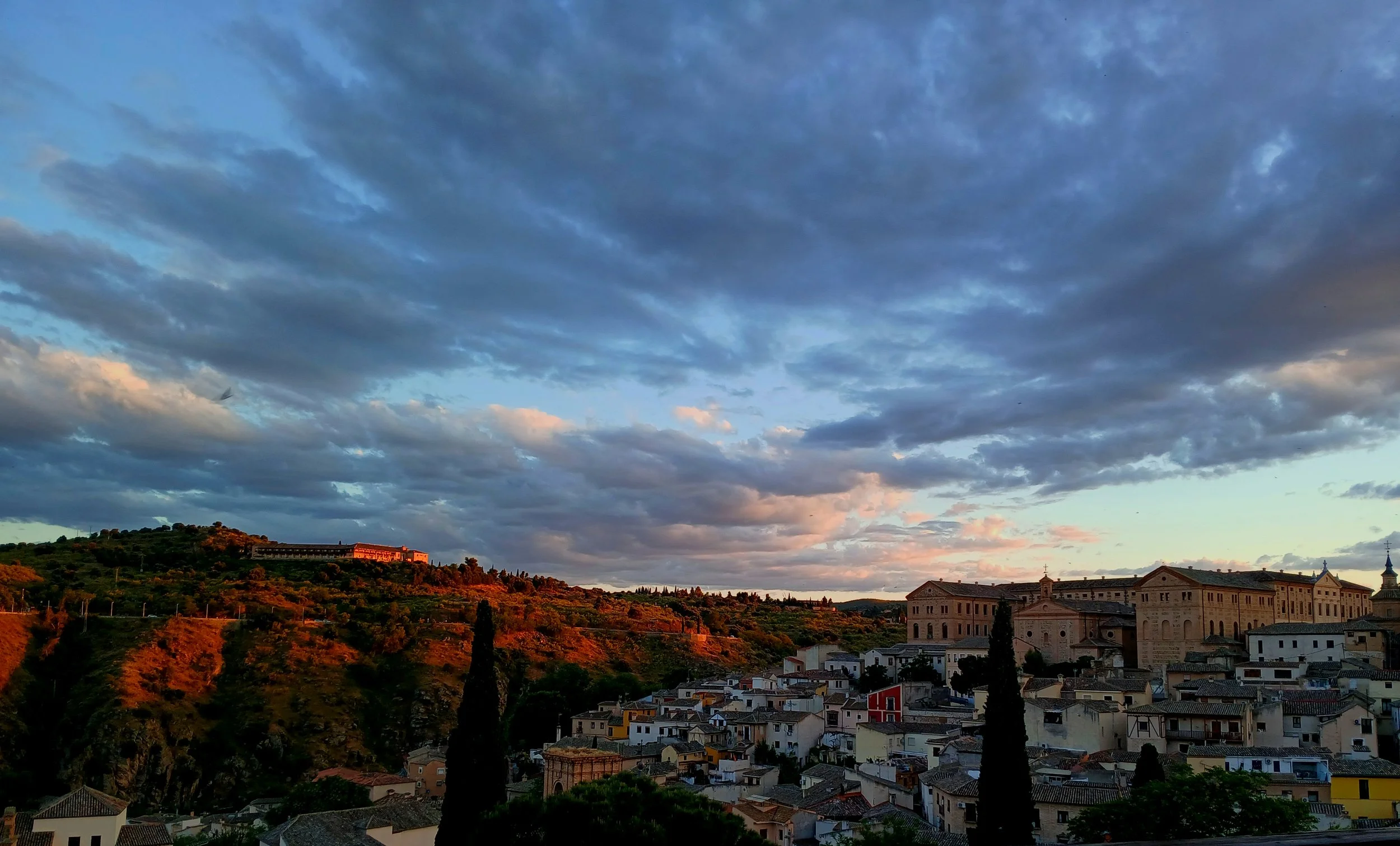
Fig. 1: View of El Mirador during sunset from my window in Toledo, Spain
Never having stepped foot on another plane, let alone the ground of another country, nothing could have quite prepared me for the experiences I encountered in that land where Don Quixote was first imagined. I grounded myself in my goals toward maintaining my personal academic standards and building cross-cultural bridges of understanding with myself and locals. I desired to further enhance my knowledge of Spanish, to deeply connect with those around me, and to develop my skills in ethically and mindfully conducting interviews with natives for future ethnographic research. Through my coursework abroad and traveling across 15 Spanish cities in 7 autonomous regions of Spain, I began to understand the interwoven pattern of the regional subcultures in which I found myself.
This phrase, “in which I found myself,” holds true literally and figuratively, as my travels throughout Spain not only allowed me to understand the cultural differences of those around me, but to do so within the context of discovering who I am on an international scale.
I found my place in navigating hierarchical relations through the insistent pleas from older Spaniards to tutear them, instead of utilizing formal language with like relations in Latin America and the southern US. I found the cultural and personal joys to be revealed in sharing long sobremesas with two Spanish abuelitas, in sharing our lives over wine glasses and empty plates once full of recipes born out of the Francoist regime. There was immense relaxation and socialization found at the end of the culinary experience that would have otherwise caused an anxious rush for the check for Americans (as well as some Scandinavians, as I discovered one crisp afternoon in Sevilla). Through those long conversations with Rosalía and Carmen, I found their distinct regional backgrounds led them to approach conversation itself differently, much like my grandmas from Mississippi and Michigan whenever they converse. These profoundly insightful conversations culminated in an oral history documentary entitled “The Spanish Woman of Then & Now: Stories from the Feminine Experience During and After the Francoist Regime.”
Fig. 2: People (and myself) in the Barcelona Metro
Fig. 3: Opening sequence of “The Spanish Woman of Then & Now”
Amid understanding how relationships are formed and maintained in Spain, I came to find the essential cultural values of connection, rest, and intentionality.
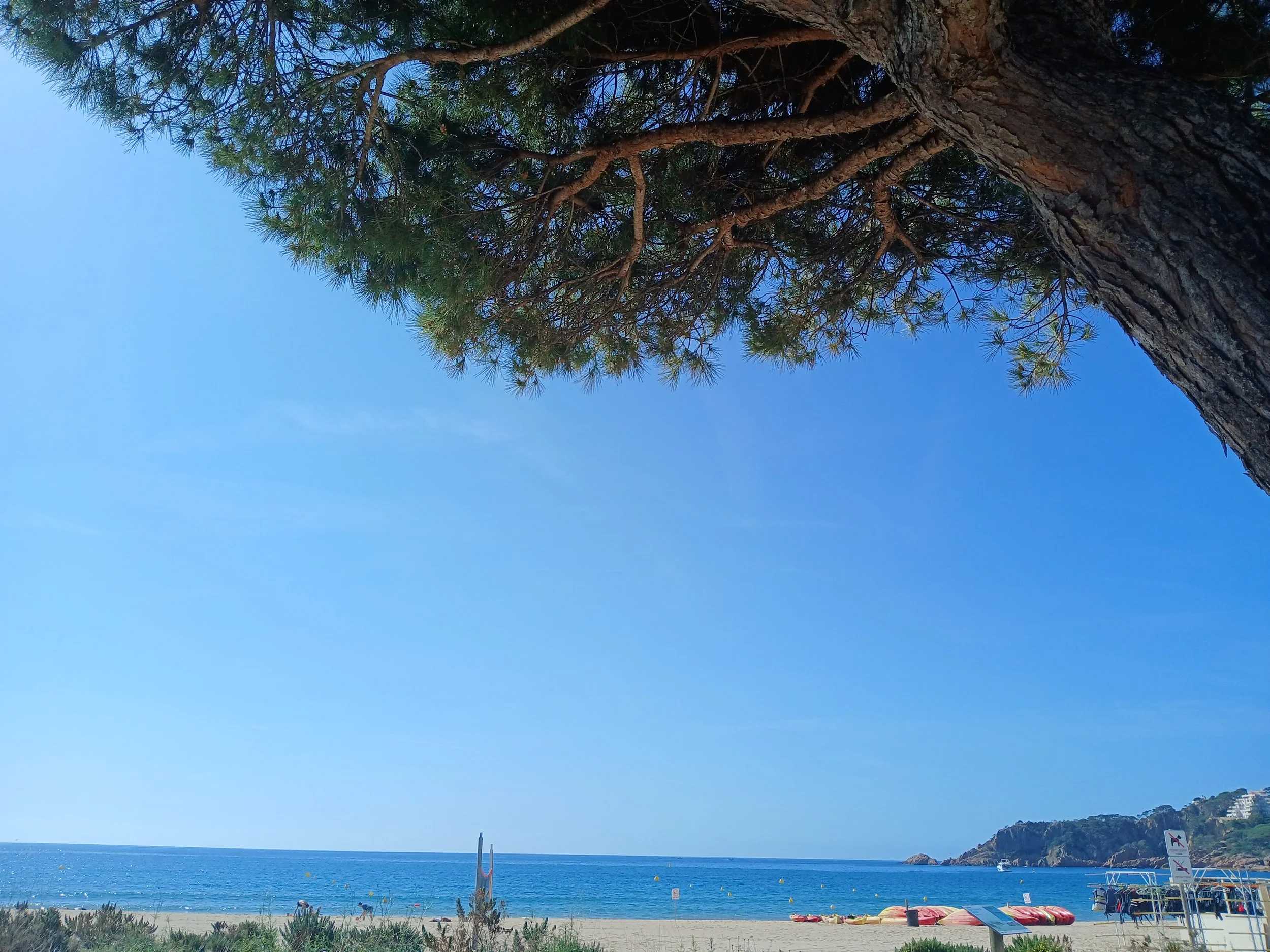
Fig. 4: Peaceful interactions in S’Agaró, Spain
I began to no longer internally grumble when I could not grocery shop in the afternoons nor have dinner until 9 pm because I understood that somewhere, the grocers, cooks, and owners were taking part in siesta: the culturally accepted pause in the day to rest and take part in social and familial relations. Shedding the hustle culture of the US, I realized that I, too, could culturally rest amid my time in Spain.
Through allowing myself to assimilate to the cultural norms and customs of Spain, I created some of my most cherished memories of my time in the country.
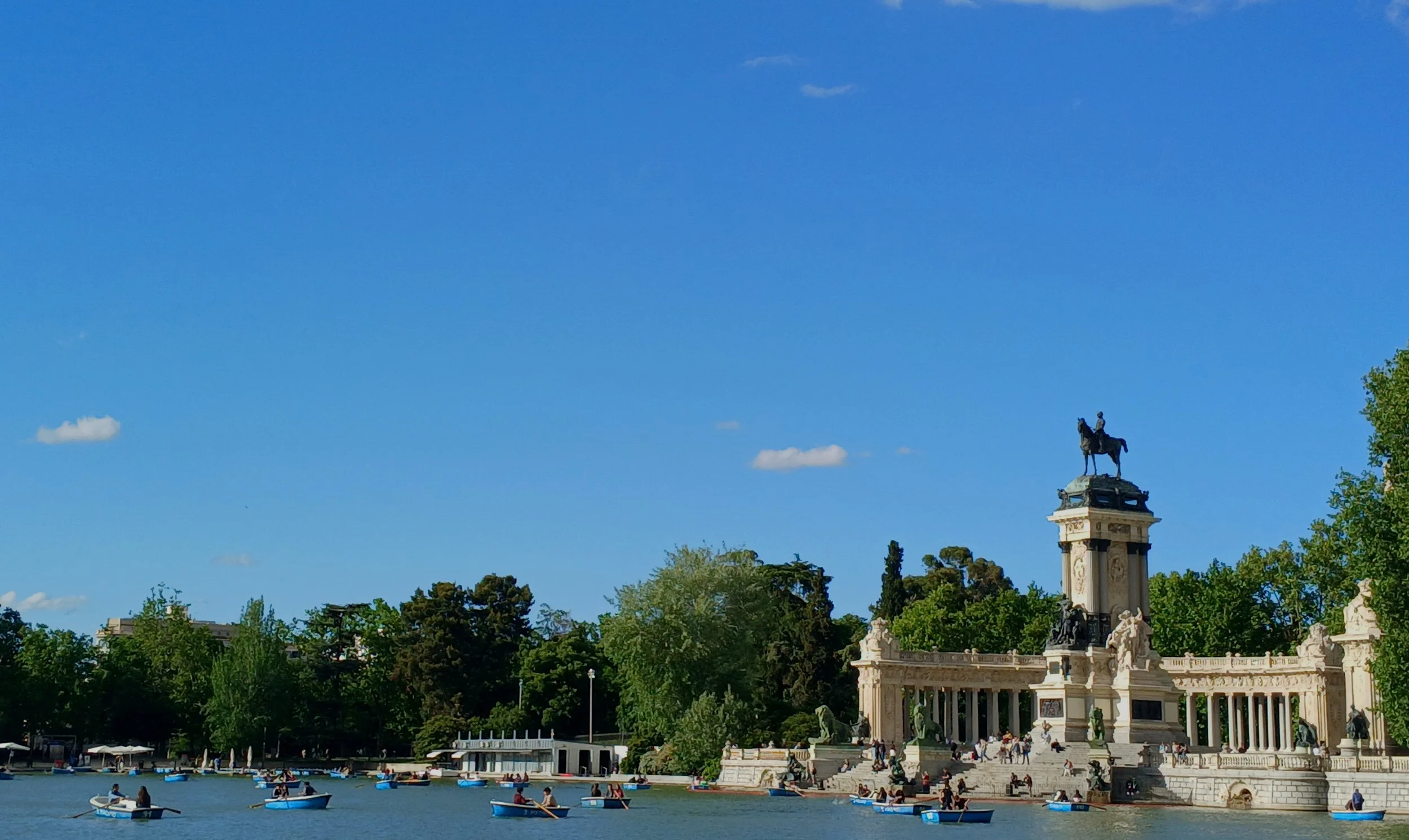
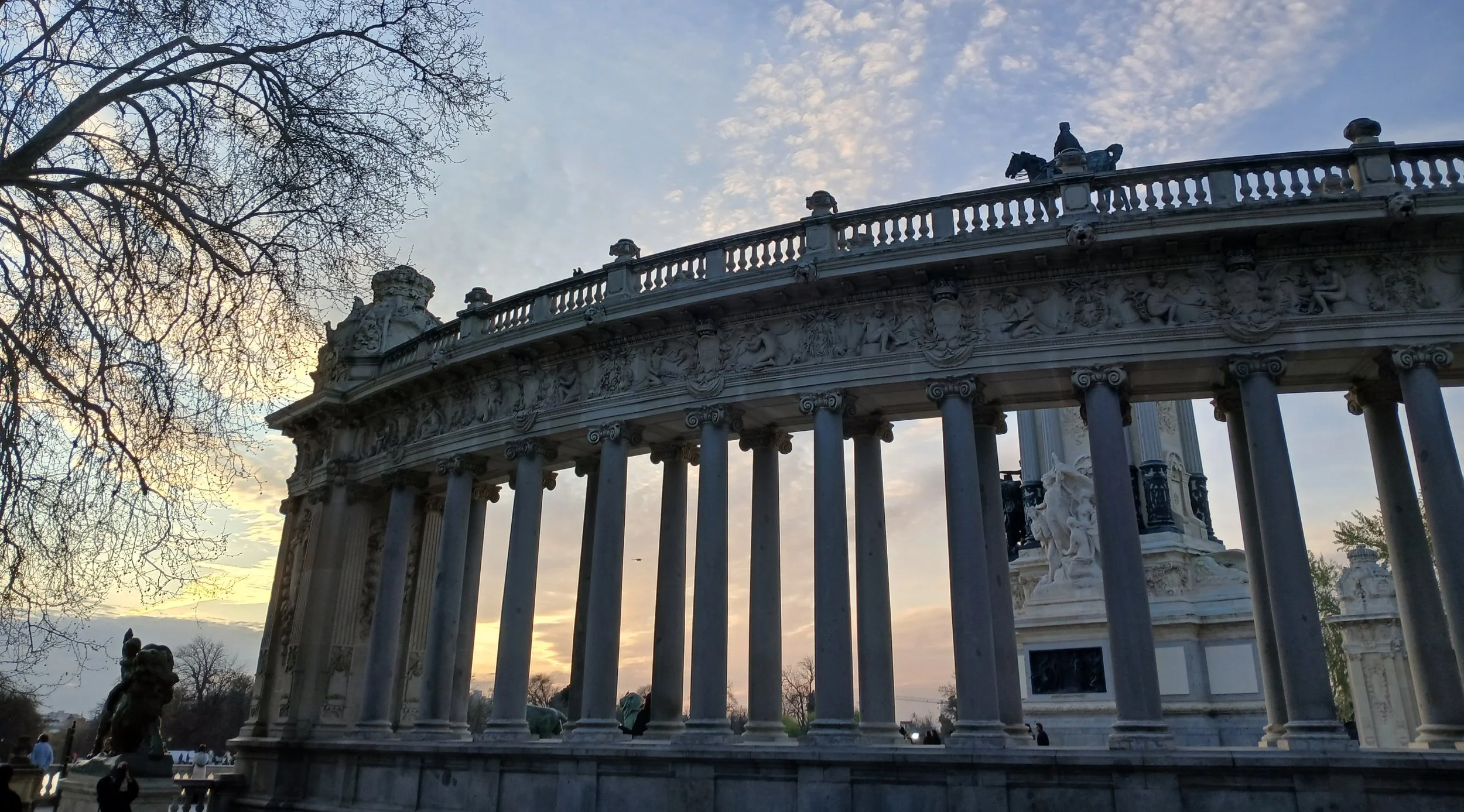
After finding a local matcha business and a shaded park bench along the sandy walkway at the heart of Retiro park, I returned again and again to these spaces to simply be: to be the regular at the mom-and-pop speciality shop, to be the person sitting in front of the El Monumento de Alfonso XII, to be present linguistically, culturally, and mentally in the beautiful and unconventionally-so places of Spain.
Fig. 5: People-watching at the Monument of Alfonso XII in Retiro Park
Prior to coming to Spain, the uncertainty of my linguistic success in Spanish-speaking countries haunted me. I wanted to not only understand the cultural and linguistic identities of others, but to also find those of myself in my newer verbal and social contexts.
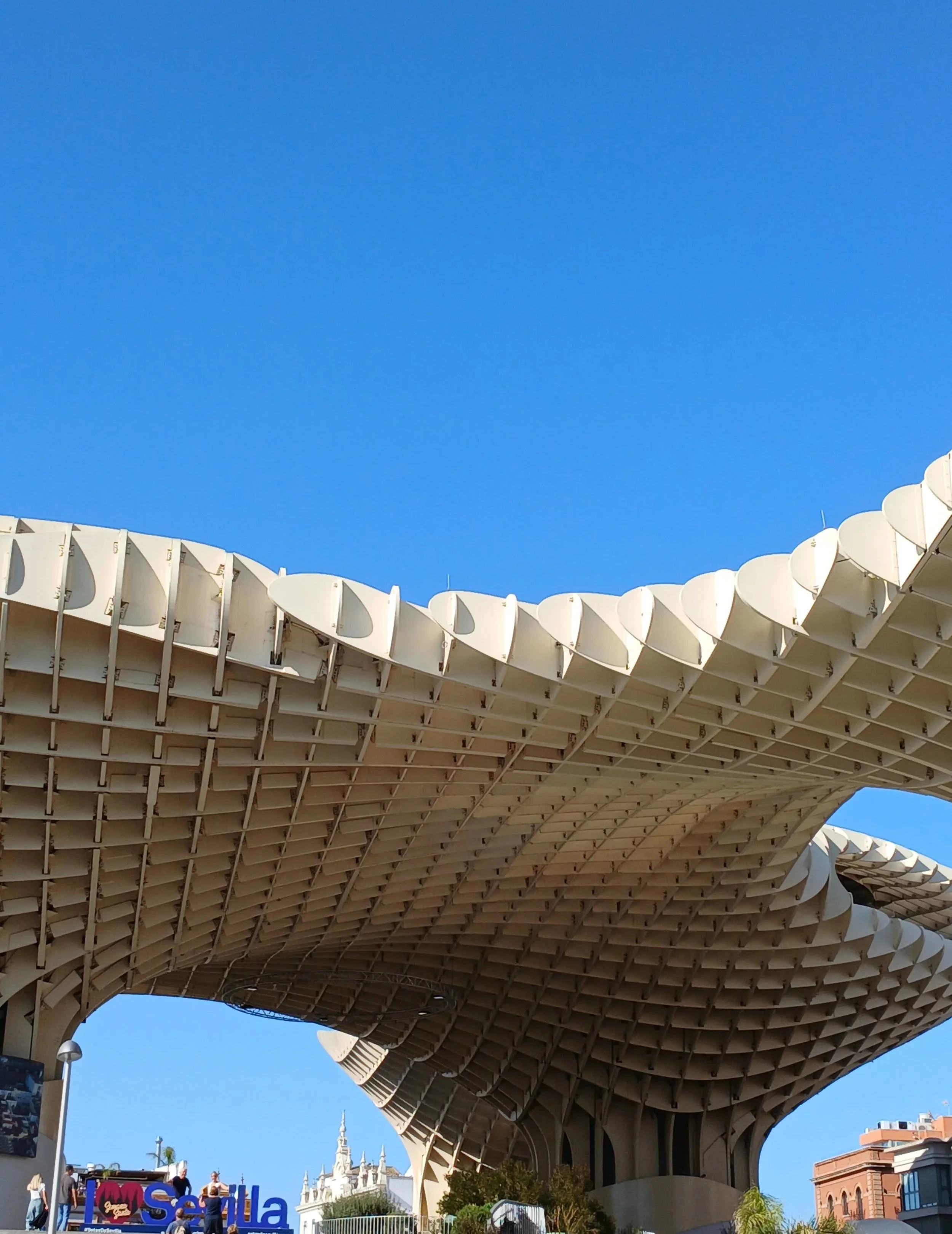
Fig. 6: Impromptu community concert under Las Setas in Sevilla, Spain
Thus, perhaps the greatest thing I will take away from my time in Spain was during these siesta moments: where lives were shared, drinks were enjoyed, and my fears of never sounding fluent were exposed.
It was here in these lovely moments where I heard these adoptive words: “Pero guapa, suenas como yo.”
“But love, you sound like me.”