Coursework
Scroll down to view summaries of and samples from the coursework I have completed in my time at Clemson and abroad or click on any of the quick-links below.
Samples from Spanish Coursework
-
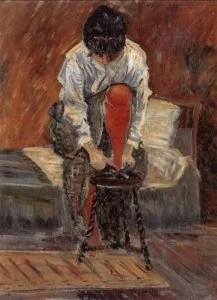
![“Le Bas rouge” Paul Signac. Available in the public domain through Wikimedia Commons.]()
Essay - Las medias rojas: El hombre dominante y la chispa feminina
Final Essay for Hispanic Literary Forms entitled Las medias rojas: The Dominant Male and the Feminine Spark
-
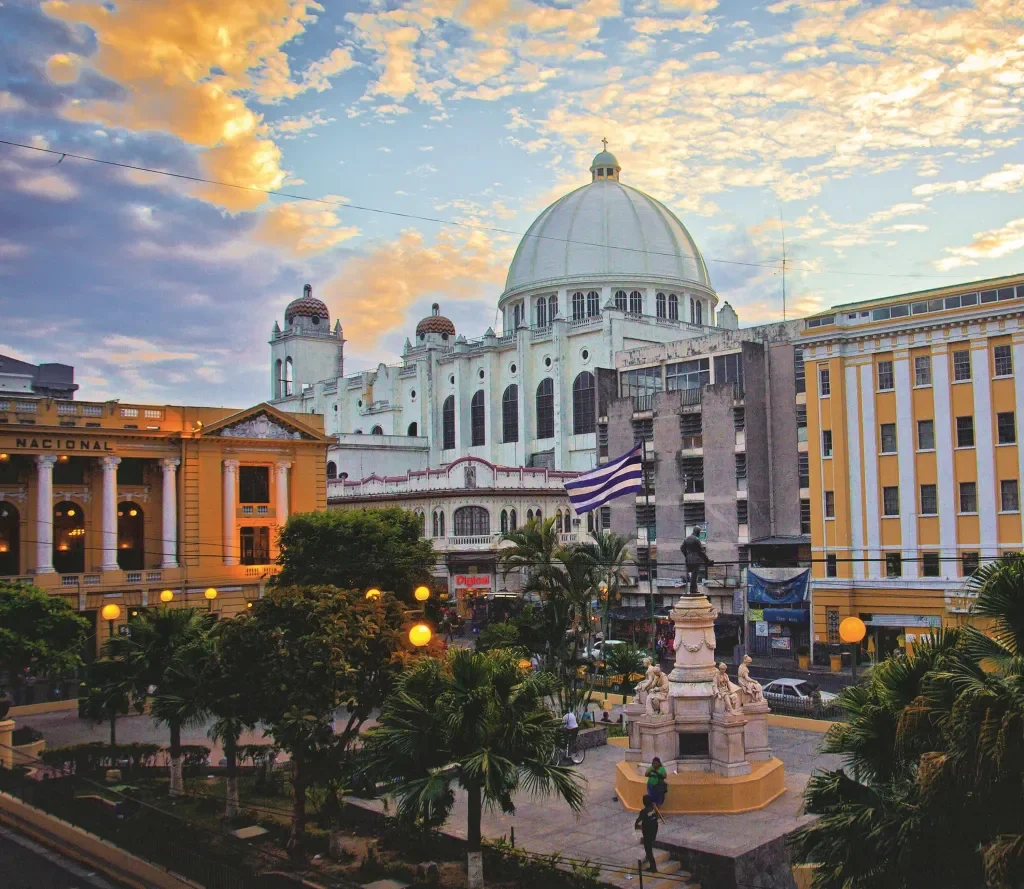
![Photo of Plaza Moran in downtown San Salvador. Photo credits: John Coletti.]()
Presentation - La fonología de /s/ en el español salvadoreño y estándar de Latinoamérica
Phonological Analysis Presentation for Hispanic Linguistics entitled: The Phonology of /s/ in Salvadoran and Neutral Spanish
-
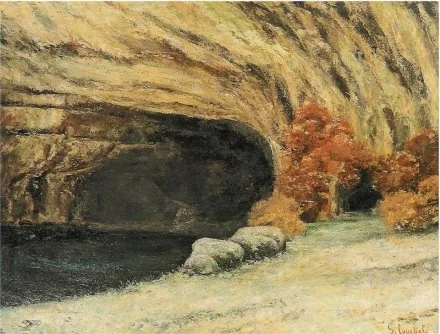
![Grotte de la Source Enneige (c. 1866) by Gustave Courbet]()
Essay - Él moriría: El mito platónico de la caverna y la vida de Sócrates
Philosophical essay for Theology of Spanish Mysticism entitled: He would die: The Platonian Allegory of the Cave and the life of Socrates.
-
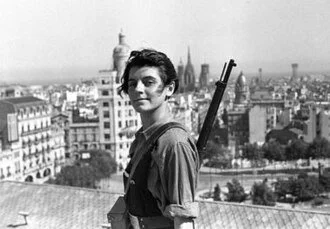
![Marina Ginestà on the rooftop of the Colón hotel in Barcelona. Photo Credits: Juan Guzmán]()
Documentary - La mujer española de aquella y ahora: Unas historias de la vida femenina durante y después del régimen franquista.
Preview of completed documentary for History & Memory entitled The Spanish Woman of Then & Now: Stories from the Feminine Experience During and After the Francoist Regime.
Full documentary not listed due to privacy concerns.
Spanish Coursework
-
SPAN 2010: Intermediate Spanish
Instructed in Spanish. Building upon prior Spanish knowledge, this class focused on vocabulary and grammar, with particular focus on verbal conjugations. Through writing, speaking, listening, and collaborative activities, these aspects of Spanish were instructed through the framework of learning about various Latin American countries and their cultures.
-
SPAN 2020: Intermediate Spanish
Instructed in Spanish. A continuation of Spanish 2010, this class added a presentation component in which one researched a particular monument in a Spanish-speaking country and expounded on it.
-
SPAN 3020: Intermediate Spanish Grammar & Composition
Instructed in Spanish. This course focused primarily on strengthening written abilities in the target language, with careful attention to verbal conjugations, conjunctions, and varying placements of adverbial and adjectival modifiers.
-
SPAN 3040: Introduction to Hispanic Literary Forms
Instructed in Spanish. Through deep literary analysis of narrative, poetic, and dramatic classics in the Spanish-speaking world, this course emphasized the development of both one’s academic and literary “voice” with written forms of the target language. Particular emphasis was given to historical & cultural context of the analyzed literary works, as well as to the understanding of certain archaisms, colloquialisms, and metaphors in Spanish.
-
SPAN 3050: Intermediate Spanish Conversation & Composition
Instructed in Spanish. This course centered on enhancing conversational abilities in the target language through emphasis on collaborative pair and group activities, analyses of spoken conversations in short films, and real-world applications in the realms of technology & culture.
-
SPAN 3140: Hispanic Linguistics*
(Cross-listed in Spanish & Anthropology Courseworks for relevance).
Instructed in Spanish. Providing the academic vocabulary necessary to articulate concepts learned in LANG 3000, this class focused on the study of linguistics through the lens of the Spanish language. Special attention was given to phonological analyses and comparisons between Spanish, English and other languages as well as to relevant issues in sociolinguistics.
-
SPAN 3160: Spanish for International Business
Instructed in Spanish. Course currently in progress. This course centers on providing one with the professional vocabulary and skills necessary to interact with the Spanish-speaking business world. Through the thoughtful development of culturally relevant business models and plans, this course challenges one to learn how to negotiate and manage a company with the goals of cross-cultural understanding at its core.
-
SPAN 3180: Spanish Through Culture: Ethnology & Folklore of the Iberian Peninsula (Ortega-Marañón Foundation)
Instructed in Spanish. An anthropological course at its core, this class discussed in depth the cultural, linguistic & historical differences across the various regions of Spain, as well as their varying socioeconomic and subsistence patterns Diverse emic and etic perspectives within the country were particularly emphasized through the analyses of primary and secondary sources as well.
-
SPAN 4070: Hispanic Film
Instructed in Spanish. Course currently in progress. Through technical and interpretive studies of Hispanic and Luso-Hispanic films, this course discusses relevant issues and questions in Latin America how film engages with pressing-social matters to form a coherent, moving, and entertaining narrative. Special attention has been given the study of films from a plethora of countries in order to foster comparative perspectives on the varying cinematic traditions to be found in Luso-Hispanic countries.
-
SPAN 4230: Advanced Topics in Hispanic Linguistics: Colloquial Spanish (Ortega-Marañón Foundation)
Instructed in Spanish. With particular focus on collaborative pair and group conversation, this course centered on understanding colloquialisms present in Castilian Spanish. General terms spanning the various dialects were discussed as well as regionalisms from the 17 autonomous communities.
-
SPAN 4990: Special Topics: History & Memory (Ortega-Marañón Foundation)
Instructed in Spanish. This class centered on developing skills and relevant cultural knowledge necessary to ethically and mindfully execute an oral history documentary on the Spanish female experience intra- & post-Francoist regime. Through informant interviews and holistic lessons on Spanish history and culture, alongside the analyses of primary and secondary contextual sources, memory was analyzed as a tool through which morality, personality, and public and personal opinion are shaped.
Samples from Anthropology Coursework
-
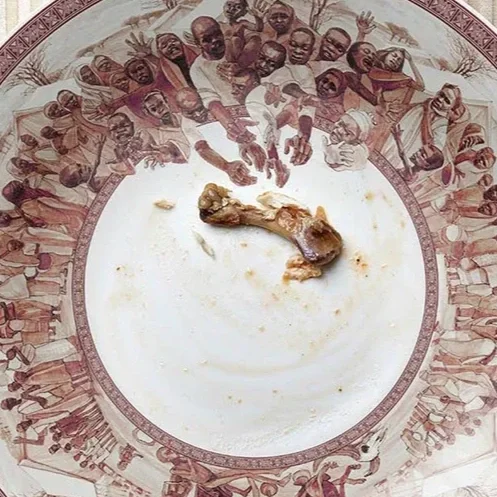
![Photo of World Hunger Food Programme Hunger Plate]()
Essay - Scarcity in Abundance: World Hunger as the Product of the Globalized Foodscape
Essay written for the Anthropology of Food centered on current statistics regarding food insecurity and how cultural shifts could provide a solution to the unbalanced global foodscape.
-
![St. Jerome by Giovanni d'Alemagna (1444)]()
Presentation - Latin Archaisms in Spanish: An Etymological & Historical Study
Presentation for Introduction to Linguistics that analyzes the etymological origins of everyday words in Spanish, situated in the historical contexts of which they are products
-
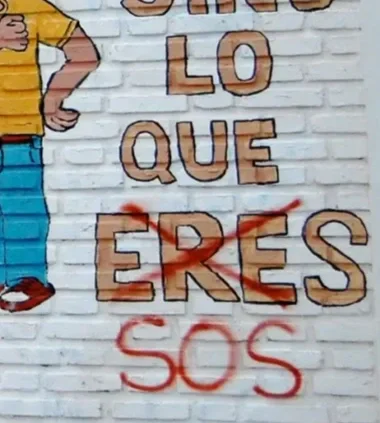
![Photo from https://remezcla.com/lists/culture/central-americans-reclaiming-vos-california/]()
Presentation - Voseo: Un estudio etimológico y cultural
Presentation for Hispanic Linguistics entitled Voseo: A cultural and etymological study. This presentation highlights the semantic and subsequent cultural differences in the use two distinct second person singular pronouns in Spanish.

Anthropology Coursework
-
ANTH 2010: Introduction to Anthropology
This foundational course functioned as a thorough overview of the traditional four subfields of anthropology within the States: archaeology, biological & cultural anthropologies, and linguistics. Emphasis was placed on the core values of holism and cultural relativism.
-
ANTH 2050: Professional Development
This discussion-based course provided one with the tools necessary to navigate the job market post-graduation. A collaborative course in nature, discourses with current professionals and academics in the fields of cultural anthropology, qualitative research, and traditional and underwater archaeologies were had: allowing students to inquire not only into the job prospects within their respective potential subfields, but into the state of anthropology in the United States as well.
-
LANG 3000: Introduction to Linguistics
This course centered around the fundamental subfields of linguistics and their various research interests and current issues. Through the implementation of linguistic analysis and subsequent presentations of analyses, this course challenged one to not simply study linguistics, but to apply its methodologies in analytical case studies and create discourse on these analyses. Special attention was paid to general linguistics and phonology in particular, as well as to historical and sociolinguistics.
-
ANTH 3010: Cultural Anthropology
This course provided an in-depth foundational understanding of the cultural anthropology subfield through the intensive critical analysis of classic studies, theories, and ethnographic methodologies. Special attention was given to subsistence and kinship systems as well as to major schools of cultural theory and their subsequent frameworks for viewing particular case studies. Individual ethnographic fieldwork, inquiries into ethics, and reflection was also completed for this course.
-
SPAN 3140: Hispanic Linguistics*
(Cross-listed in Spanish & Anthropology Courseworks for relevance).
Instructed in Spanish. Providing the academic vocabulary necessary to articulate concepts learned in LANG 3000, this class focused on the study of linguistics through the lens of the Spanish language and its various dialects. Special attention was given to phonological and sociolinguistic analyses alongside semantic equivalence comparisons between dialects of Spanish, English and other languages. Much like the format of LANG 3000, this course implemented the case-study and presentation format to encourage collaborative discussions on language and its impacts on and reflections of the sociocultural, economic, and political systems of its speakers.
-
SPAN 3180: Spanish Through Culture: Ethnology & Folklore of the Iberian Peninsula (Fundación Ortega-Marañón Foundation)*
(Cross-listed in Spanish & Anthropology Courseworks for relevance).
Instructed in Spanish. An anthropological course at its core, this class discussed in depth the cultural, linguistic & historical differences across the various regions of Spain, as well as their varying socioeconomic and subsistence patterns Diverse emic and etic perspectives within the country were particularly emphasized through the analyses of primary and secondary sources as well.
-
ANTH 3250: The Anthropology of Food
This course focused on food as not only a resource, but as a cultural object and tool for societal change. Through discussions of economics & politics as well as the impacts of globalization on food systems, this course challenged one to look beyond foodscapes and into how food is an integral part of how humankind navigates and finds meaning in life.
-
ANTH (HON) 3280: The Future of Humanity
Through the holistic and analytical lens of humanity’s history and present state, this class is centered around the future of humanity, with special attention to diverse biological and cultural adaptations. In learning about these diverse perspectives, logics, and overall cultures, the coursework challenges one to identify how these could be used as tools to solve pressing global challenges of today.
-
ANTH 3310: Archaeology
This class was an introductory course into the field of archaeology, and thus provided a broad overview of its various subfields and current issues, as well as the foundations of archaeological methodologies. Special attention was given to lithics analyses, proper STP formation, and academic voice in archaeological papers.
-
ANTH (HON) 3320: World Archaeology
Course currently in progress. This class centers on the holistic archaeological study of past peoples within the theoretical framework of the Anthropocene. Through analyses of various educational texts and academic studies, critical thinking regarding what constitutes an anthropogenic age is discussed.
-
ANTH/BIO 3510: Biological Anthropology
This course grounded the anthropological study of past hominins in the biological analysis of primate behavior and human evolution in physiological variation. Through lectures, collaborative discussions, and labs, one was challenged to become acquainted with, but fluent in the skeletal anatomies and histories of hominins ranging from Sahalenthropus tchadensis to Homo sapiens sapiens.
-
ANTH 4030: Ethnographic Fieldwork
Research currently in progress.
-
ANTH 4280: Law, Culture, & Society
This seminar course situated the student within the historical and theoretical contexts of legal anthropology. Through the initial analyses of natural law, evolutionary and foundational legal anthropology theorists, the course then challenges one to apply the theories learned in the case studies of past and present legal phenomena.
Let’s connect.
Feel free to reach out via email, LinkedIn, or the provided form. I look forward to connecting with you!
Email: emmagohrt@gmail.com
LinkedIn: www.linkedin.com/in/emma-ohrt